
Ranges
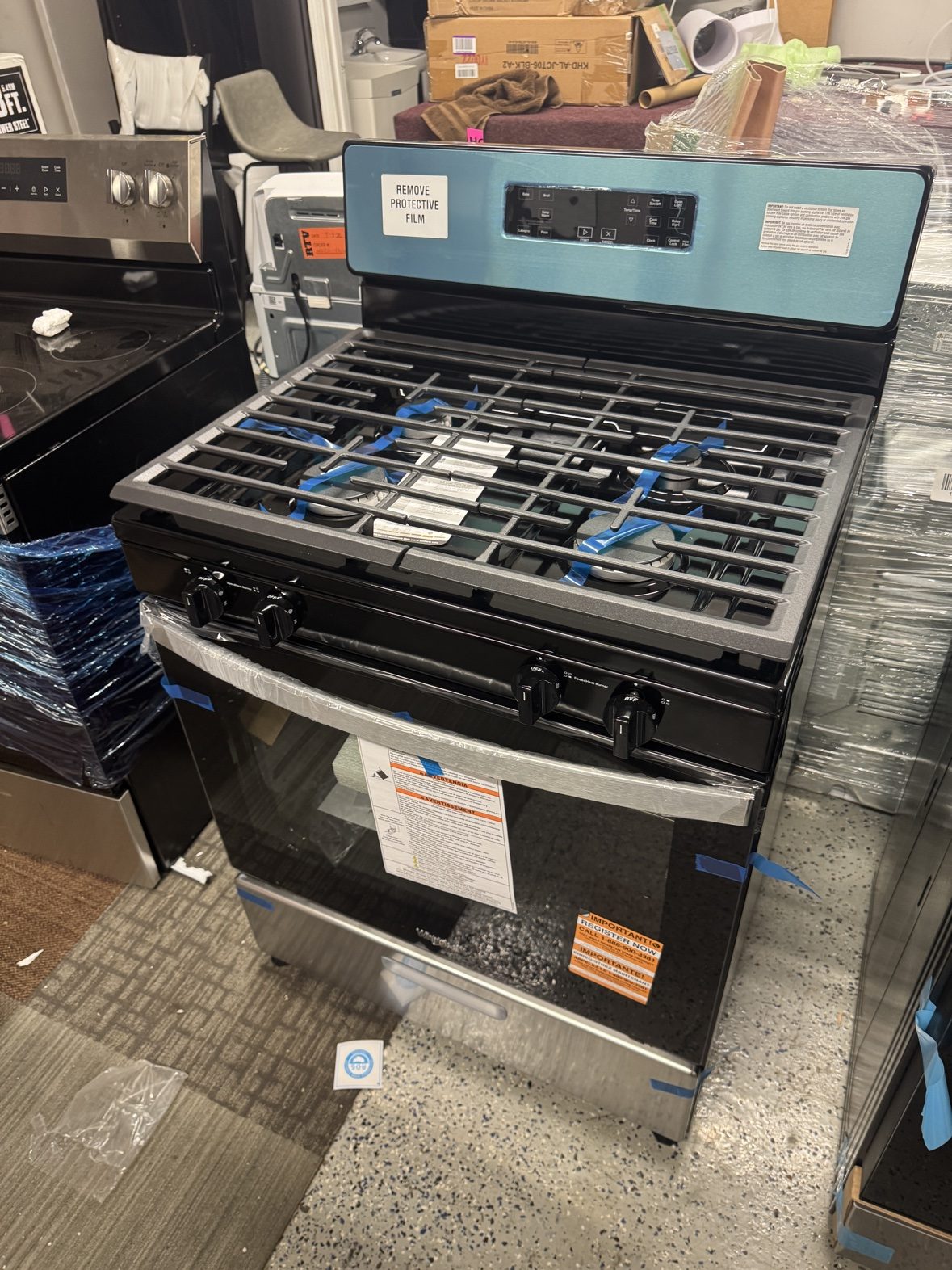
NEW Whirlpool Stainless Gas Range
$649
$500
The range is the centerpiece of the kitchen — and the appliance where the fuel question matters most, because cooks have strong opinions about it. Here's the practical version.
Gas — instant heat, instant off, visible flame. Preferred by most serious cooks. Needs a gas line behind the stove.
Electric smooth-top — sleek, easy to wipe clean, very even oven heat. Needs a 240-volt outlet.
Electric coil — the budget workhorse. Cheap, repairable, and nearly indestructible.
Same rule as dryers: match what's already in your kitchen. Running a gas line or a 240V circuit just to switch fuels rarely pays off.
The standard range is 30 inches wide. Measure your opening, and check the depth including the handle — that's the part that sticks out into the walkway. Confirm whether you have a gas hookup or a 240V outlet before you fall in love with a unit.
If there's one step-up worth the money on a range, it's convection — faster, more even cooking you'll notice every single week. Thanks to scratch-and-dent pricing, a convection range with a scuffed side panel typically costs about what a basic coil-top model does new. Same budget, much better cooking.
Convection fans cook faster and more evenly — genuinely useful. Air-fry modes are a fun bonus on newer models. Self-cleaning is convenient but hard on the oven's electronics over time; many techs quietly recommend against using it often.
Live inventory — when it's gone, it's gone.
$649
$500
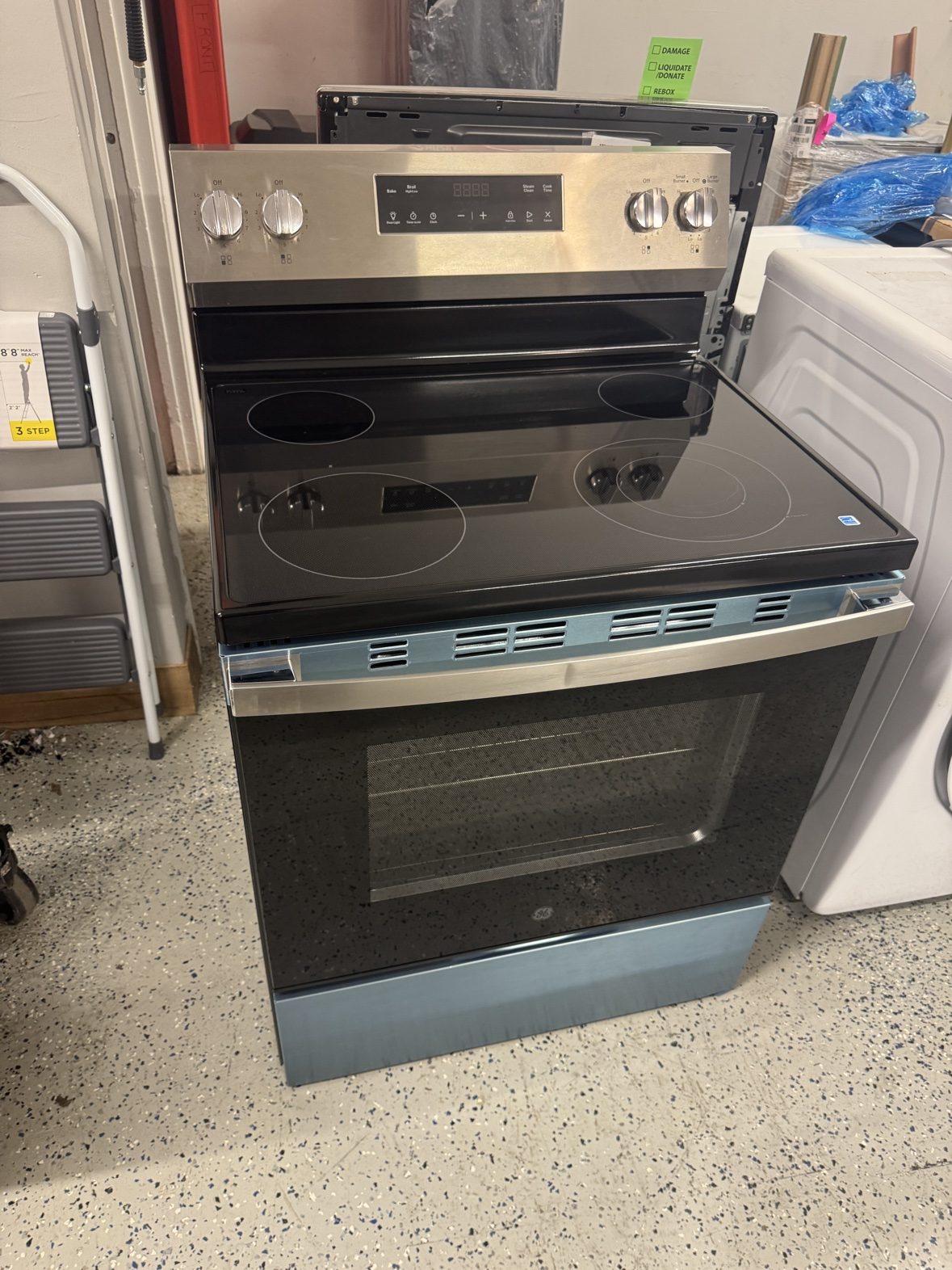
$929
$500
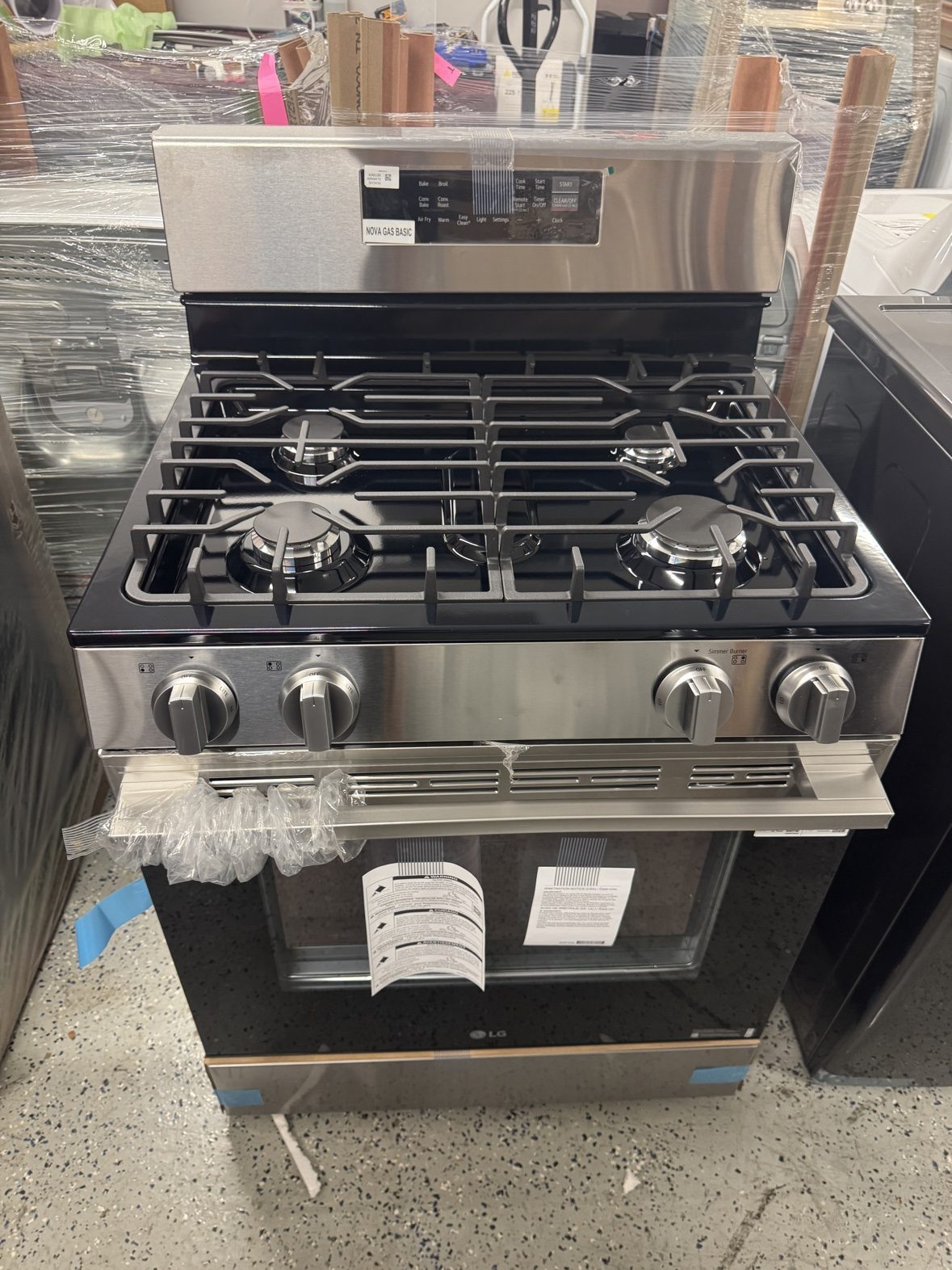
$1,099
$600
Every unit is tested before it's listed and backed by a 14-day money-back guarantee.