
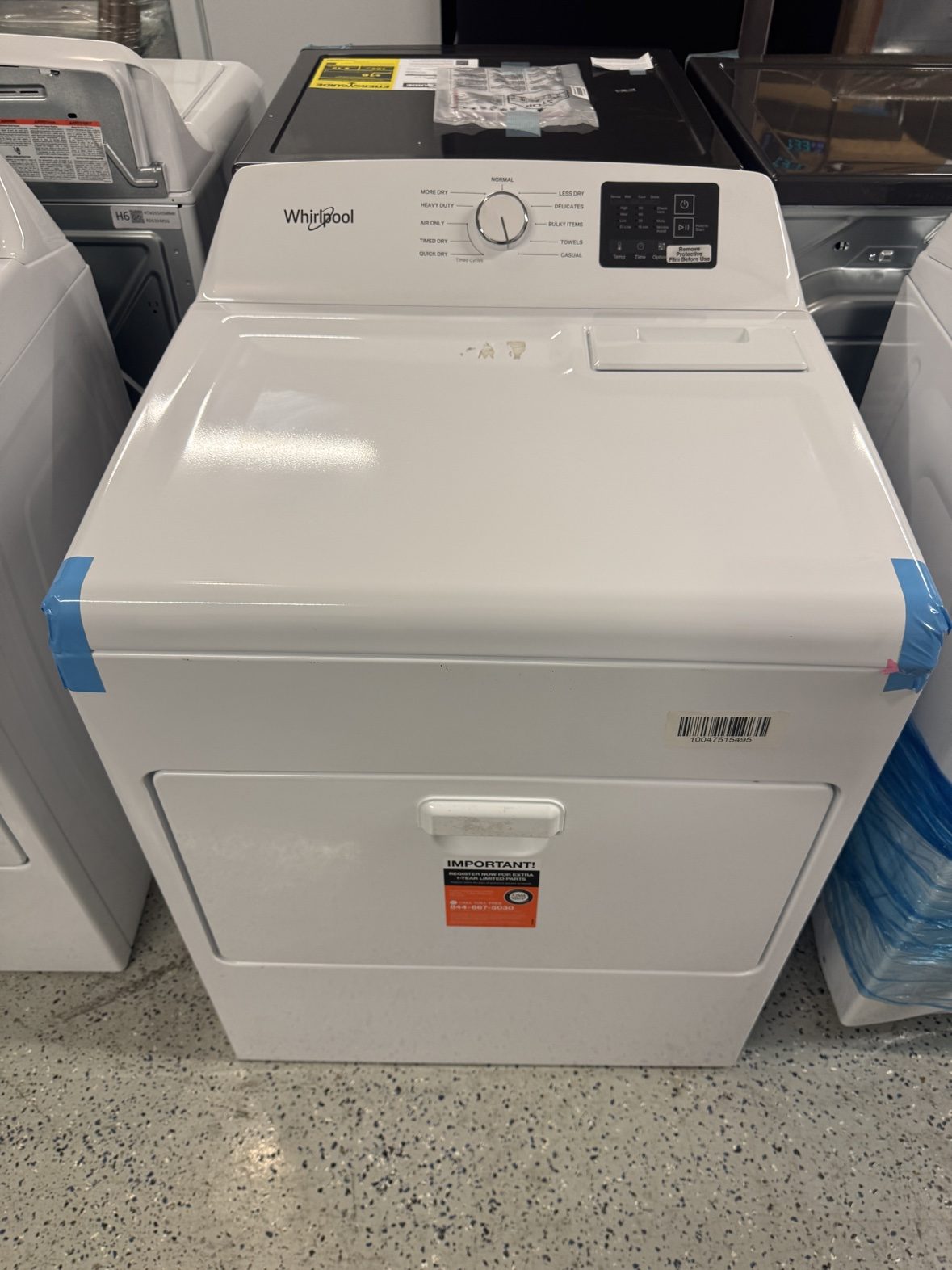
Dryers
New Whirlpool Electric Dryer
$699
$420
Dryers are even simpler than washers — but there's one decision that matters more than everything else combined: gas or electric. Get that right and the rest is easy.
Gas dryers cost more up front but are cheaper to run, and they heat up faster. They need a gas line in the laundry room.
Electric dryers cost less to buy but need a 240-volt outlet — not a regular wall plug.
The practical rule: buy whatever your laundry room already has. Running a new gas line or wiring a 240V circuit costs far more than any savings from switching fuel types. If you're not sure what you have, text a photo of the hookups and we'll help you figure it out.
Like washers, standard dryers are about 27 inches wide. Allow a few extra inches of depth for the vent hose behind the machine, and check the door swing. If you're buying a washer and dryer together, matching widths look right and fit the space evenly.
Here's the thing about dryers: the smartest money isn't in the dryer, it's in the pair. A matching washer and dryer bought together with the bundle discount (up to 15% off) often costs less than buying them one at a time — which means the nicer dryer you were debating basically pays for itself. Match your washer's width, pick your fuel type, and bundle them.
Almost every home dryer in the US is vented — it needs a duct to the outside. Keep that duct short and clean; a clogged vent is the #1 reason dryers underperform and the #1 laundry-room fire hazard.
Live inventory — when it's gone, it's gone.
$699
$420
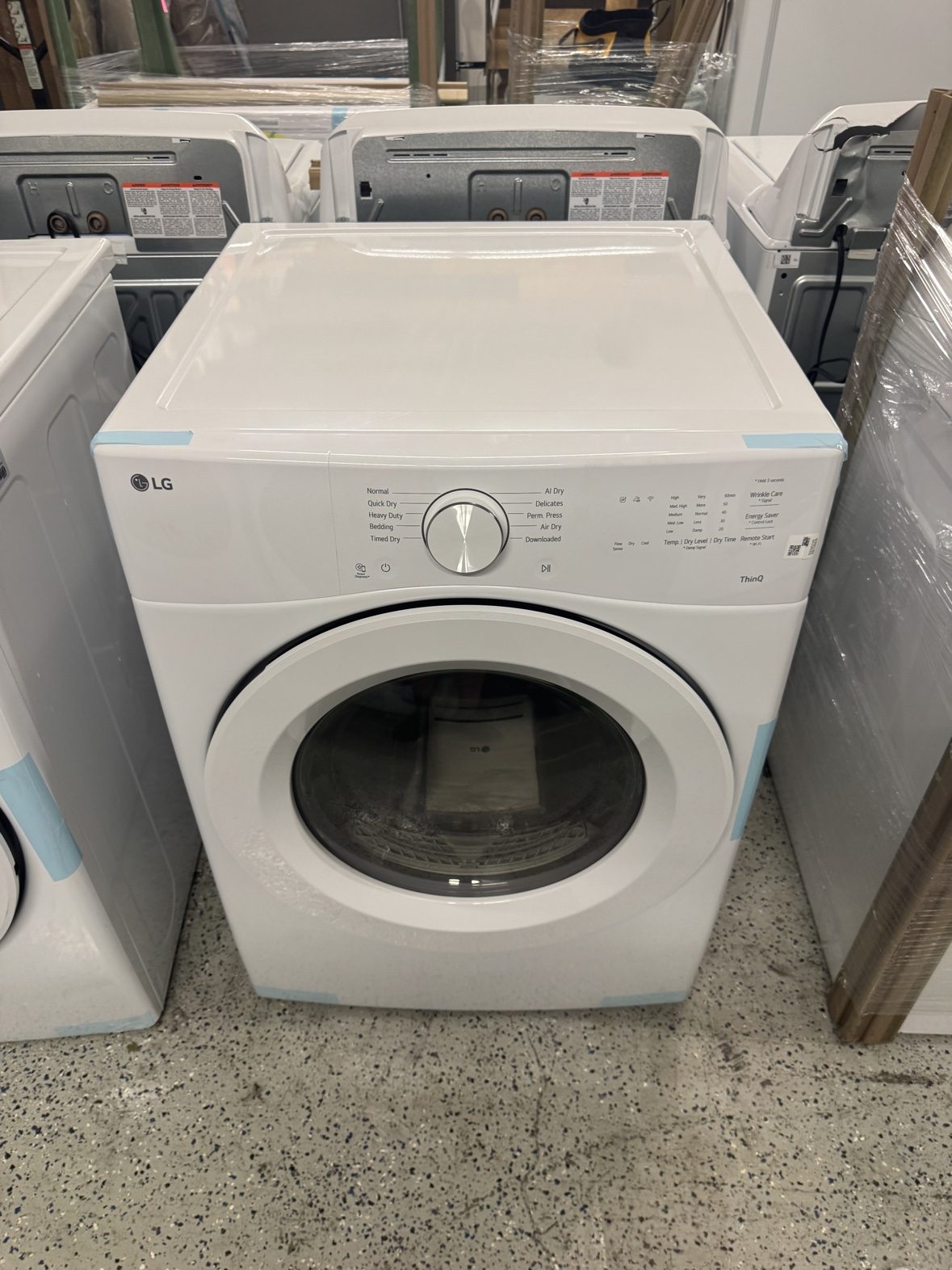
$1,149
$480
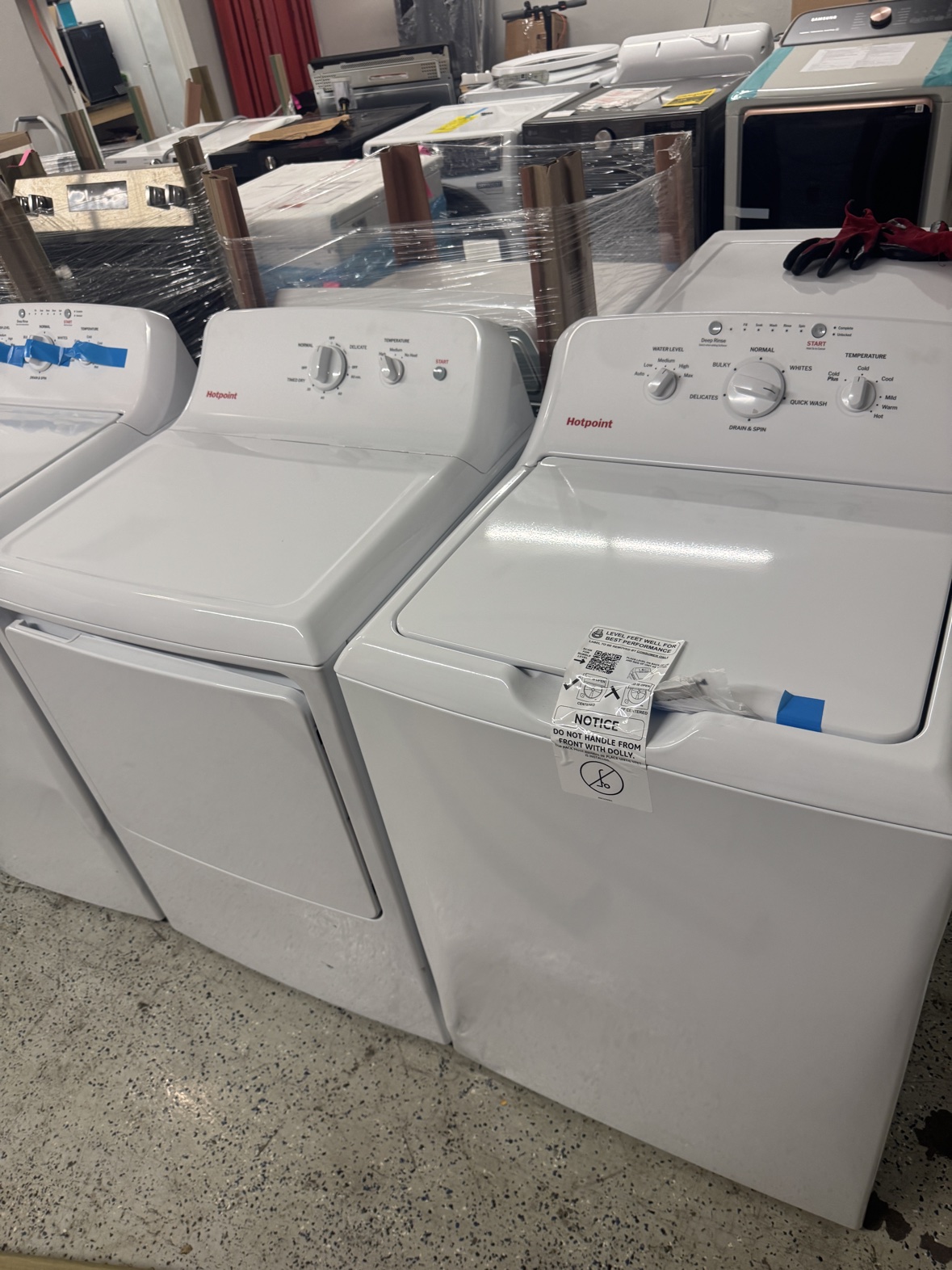
$700
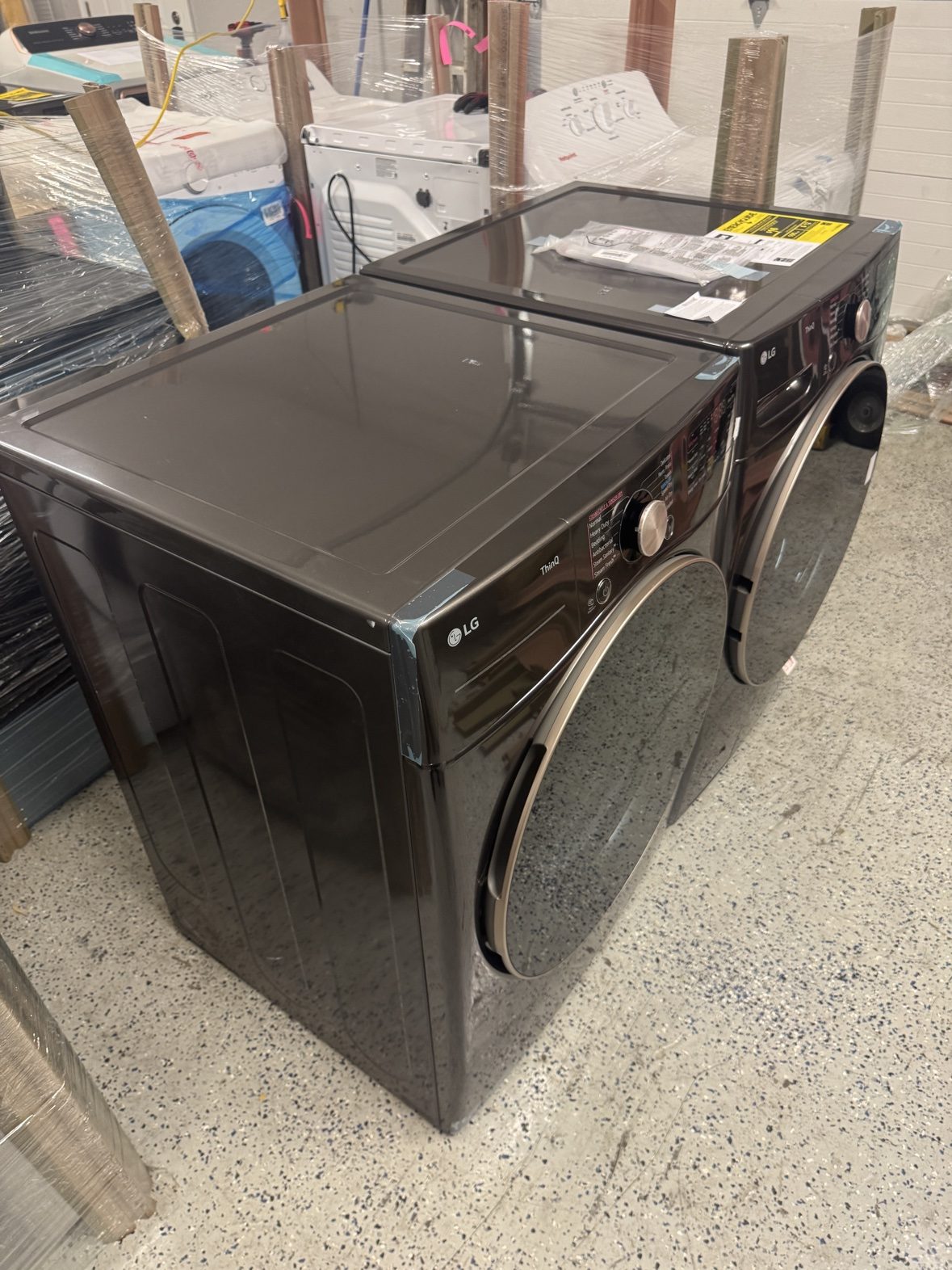
$2,598
$1,200
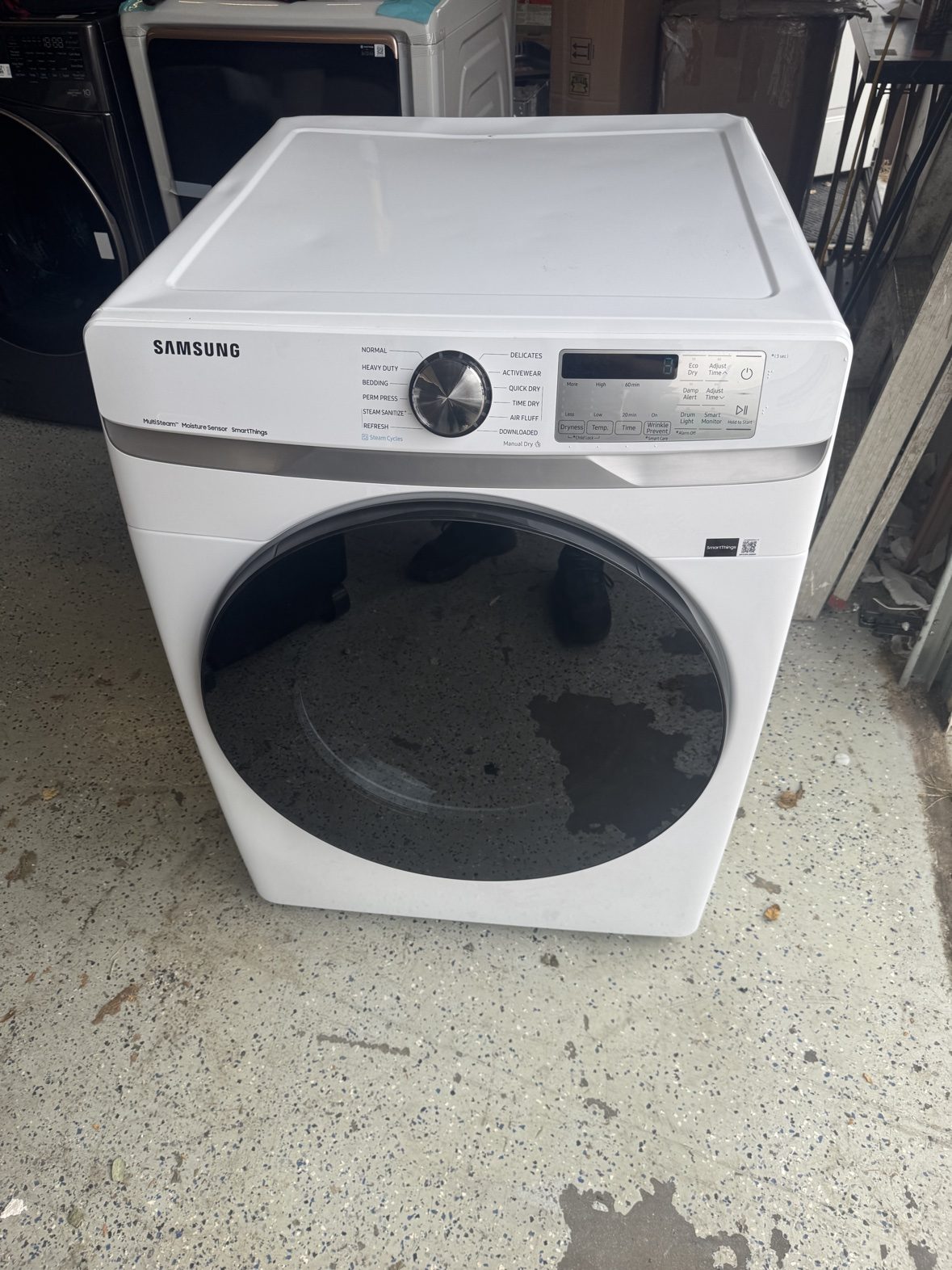
$260
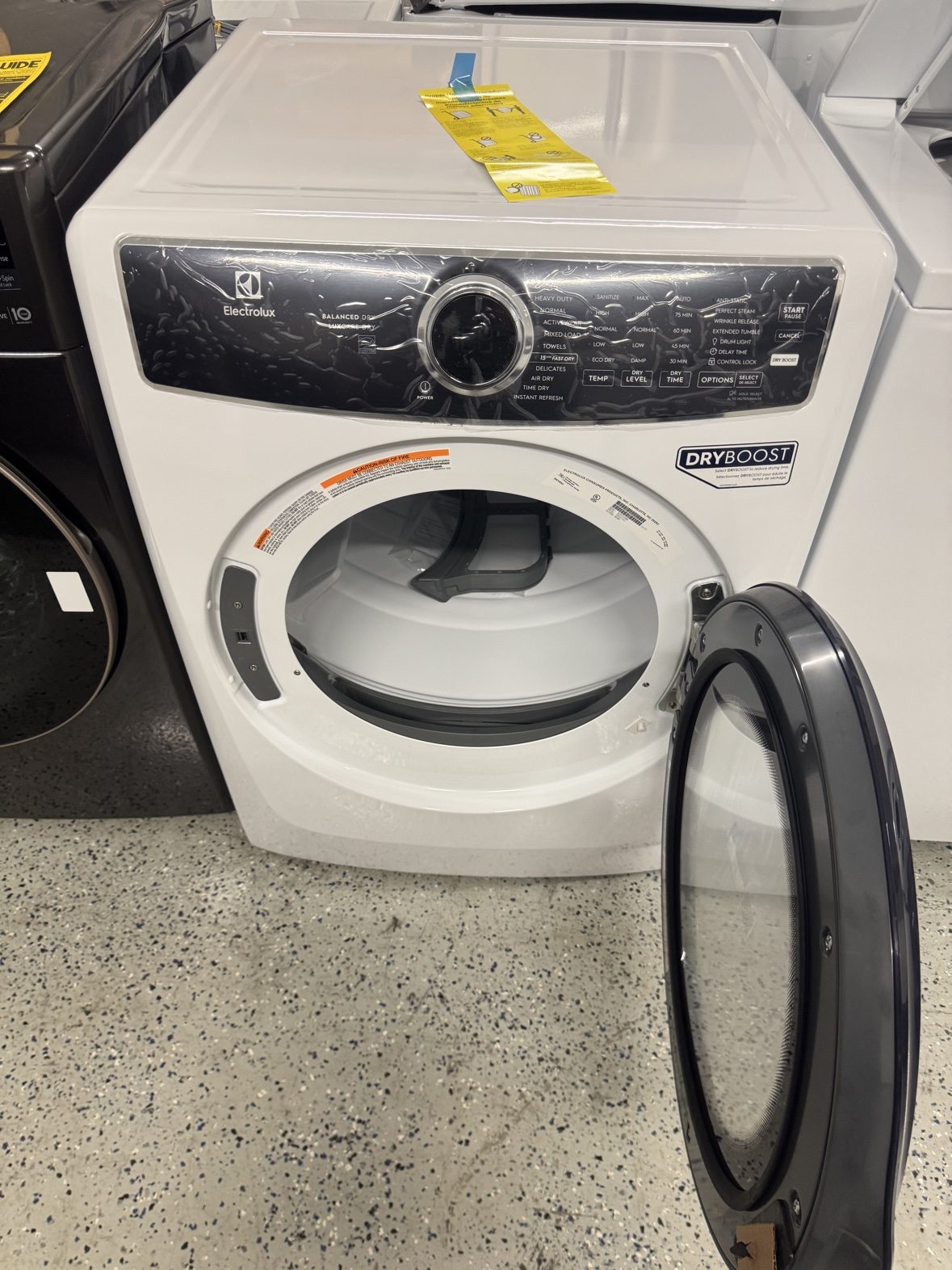
$560
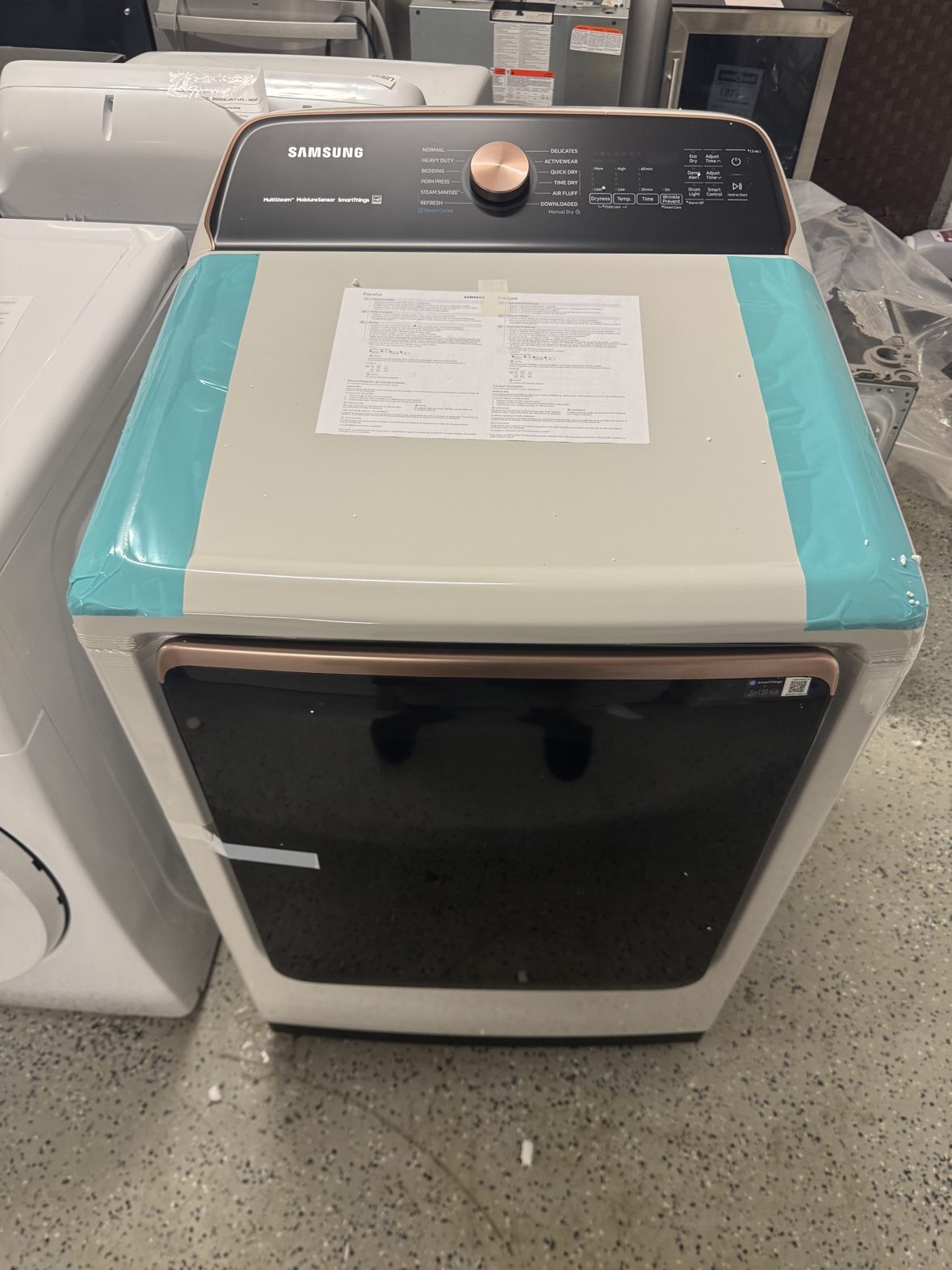
$460
Every unit is tested before it's listed and backed by a 14-day money-back guarantee.